

2026.03.10

Ketchup is one of the most widely consumed condiments worldwide and is served alongside a variety of foods. This article examines the history of this popular seasoning, the ingredients used in its preparation, the potential health effects of its components, important storage considerations and other related aspects.
History of Ketchup
Ketchup has an ancient history that traces back to early China. According to some sources, the earliest form of ketchup emerged around 300 BCE in China. The first versions were fermented sauces made from salted fish, produced by Chinese fishermen. After catching large quantities of small fish, they preserved them by heavily salting and storing them in warehouses to extend shelf life. Over several months, enzymes naturally present in the fish such as trypsin and aminopeptidase broke down the fish proteins, initiating fermentation. These enzymes played a major role in the fermentation process. The result was a dark, salty liquid rich in free amino acids and flavor compounds, marketed as “fish sauce” and widely used as a seasoning.
Chinese fishermen were not the only people who appreciated the distinctive flavor of this fermented sauce. In the ancient world, the Greeks and later the Romans also incorporated fish sauce as an integral part of their cuisine. Among the Romans, it was known as Garum and was extremely popular. The Romans established production facilities along the Mediterranean coast, some capable of producing thousands of gallons of garum. However, with the collapse of the Roman Empire, the once-thriving garum industry disappeared as well.
In the sixteenth century, southern China had become a major commercial and maritime hub. During this period, traders and sailors from Fujian Province introduced a sauce known as “ketchup” meaning “fermented fish sauce” to Southeast Asian regions such as Indonesia, Malaysia and the Philippines. Due to its long shelf life, this sauce was well suited for transportation along extended trade routes.
In the early eighteenth century, when British and Dutch traders entered Southeast Asia to purchase spices, textiles and porcelain, they encountered ketchup and developed an interest in it. They brought it back to Europe, where cooks attempted to modify the recipe, adding new ingredients. Nevertheless, this version still bore little resemblance to the tomato ketchup we know today.
In 1812, James Mease, an American horticulturist, presented the first known recipe for tomato ketchup, which notably did not contain vinegar or refined sugar. Soon afterward, various methods of producing tomato ketchup became popular in Europe and the United States. However, many early recipes still retained ingredients such as fish.
In 1824, Mary Randolph published a tomato ketchup recipe in her cookbook The Virginia Housewife. At that time, tomato ketchup was sold locally by farmers and most households prepared it themselves. As its popularity increased, commercial companies decided to enter the market as well.

Jonas Yerkes is recognized as the first American to bottle ketchup commercially. By 1837, he had succeeded in producing and distributing this condiment on a large scale. Later, in 1876, an entrepreneur named Heinz began manufacturing ketchup. For his recipe, Heinz used very ripe, red tomatoes, as these contained more pectin than fresher varieties. Pectin is a water-soluble fiber naturally present in tomatoes that helps improve the thickness and consistency of the sauce.
In addition, Heinz’s ketchup contained substantial amounts of vinegar and sugar, both of which contributed to its preservation and flavor. Vinegar lowered the pH (a measure of acidity and alkalinity), creating an acidic environment that inhibited the growth of many bacteria and molds and was therefore considered a natural preservative. Sugar also helped limit microbial growth by binding free water, thereby reducing its availability to microorganisms.
Over time, ketchup gained worldwide popularity. According to the most recent estimates, the global ketchup market was valued at approximately USD 19.2 billion in 2024.
Ingredients of Ketchup
Ketchup is typically made from tomato paste, vinegar, sugar, salt, liquid glucose, spicesand potable water. For enhanced flavor, additional ingredients such as red pepper, black pepper, cinnamon, nutmeg, cloves garlic and onion may also be included. To maintain a uniform texture, starch or permitted food-grade gums may be used. These components form the basic formulation of most industrially produced ketchups.
It is important to note that the use of artificial colors, preservatives, or synthetic flavorings in ketchup production is generally prohibited under food regulations.
Potential Health Concerns Associated with Ketchup
Although ketchup has a pleasant taste and is commonly consumed with many foods, some of its components particularly in certain commercial varieties may have adverse health effects if consumed excessively. These include:
- High Sugar Content
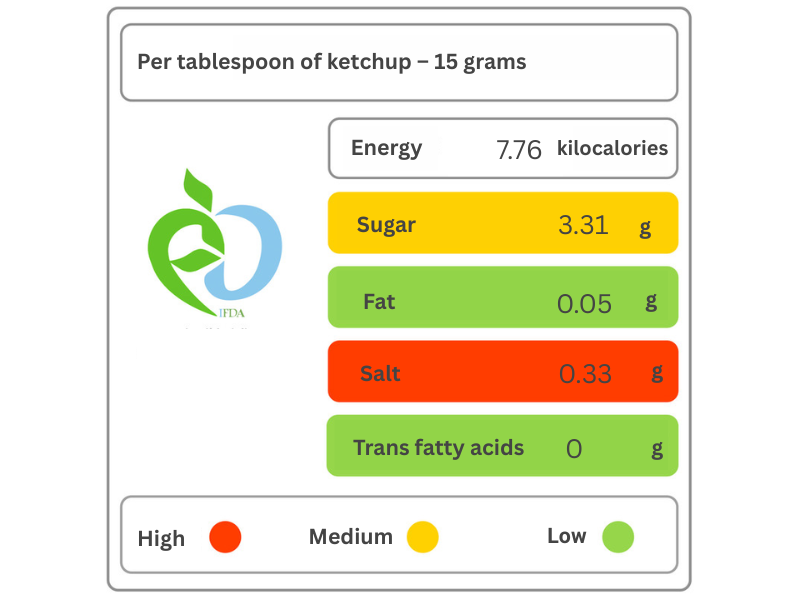
Some types of ketchup contain considerable amounts of sugar, with approximately 4.4 grams per tablespoon in certain products. This amount exceeds the sugar content of a slice of white toast (approximately 3 grams).
The World Health Organization (WHO) recommends that daily sugar intake for both adults and children should not exceed 25 grams. Excessive consumption of ketchup may therefore contribute significantly to reaching or even exceeding the recommended daily limit.
Regular consumption of high-sugar ketchup may contribute to weight gain and, by disrupting the balance of microorganisms that naturally inhabit the gut (the gut microbiota), may promote chronic inflammation, weaken the immune system and increase the risk of type 2 diabetes, among other health concerns.
- High Salt Content
The salt (NaCl) content in some ketchup brands is approximately 0.33 grams per tablespoon. The World Health Organization recommends that adults consume no more than 5 grams of salt per day. Considering that salt is present in many daily foods, excessive ketchup consumption may cause total daily salt intake to exceed recommended limits.
Since children tend to consume more ketchup and have lower recommended daily salt allowances, monitoring their intake is particularly important.
Excessive salt consumption is associated with several negative health outcomes, most notably an increased risk of high blood pressure, cardiovascular diseases, kidney disorders and related complications.
In addition to the potential risks associated with high sugar and salt content, there are other possible concerns related to ketchup consumption for certain individuals, including the following:
- Acidity of Ketchup
Tomatoes are naturally acidic, therefore, products made from them, such as ketchup, are also acidic. In addition to the tomatoes, natural acids, vinegar an acidic substance is typically added to ketchup formulations to enhance shelf life. For this reason, excessive consumption of ketchup may aggravate symptoms in individuals suffering from gastric reflux (acid reflux) or other acid-related gastrointestinal conditions.
- Stabilizers
Ketchup commonly contains stabilizers such as starch and permitted food-grade gums, which help maintain texture, thickness and product stability. One of the most frequently used stabilizers in ketchup is starch. If the starch is derived from wheat, it may be harmful to individuals with celiac disease due to the presence of gluten.
Storage Conditions for Ketchup
Because of the natural acidity of tomatoes and the presence of ingredients such as vinegar and sugar, unopened and sealed ketchup bottles can remain stable and safe at room temperature for a relatively long period.
However, once the bottle is opened, conditions change. Exposure to air and environmental microorganisms can lead to alterations in flavor, color, texture and overall quality. In addition to external contamination, certain yeasts and molds such as Zygosaccharomyces bailii may be present in very small quantities within the product itself. Under favorable conditions, including room temperature and oxygen exposure, these microorganisms may become active and proliferate.
To prevent spoilage and maintain both quality and safety, ketchup should be refrigerated after opening and consumed within approximately two to three months.
Final Remarks
Given the potential health concerns associated with ketchup, consumers should carefully examine the product’s nutrition label and choose options with lower sugar and salt content often indicated by a green color code.
In addition, consumers should avoid purchasing ketchup products that lack official standard certification and authorization from the national food and drug regulatory authority. Particular caution should be exercised regarding unpackaged or bulk sauces that are sometimes stored under non-hygienic conditions at room temperature in certain restaurants or sandwich shops.
Beyond the uncertainty of their ingredients, improper storage conditions increase the likelihood of quality deterioration, microbial growth and ultimately potential health risks to consumers.