

2026.03.10
History
The earliest evidence of animal butter production dates back to ancient times, when humans began domesticating animals. It is likely that animal butter was first created accidentally, for example when a small amount of milk, stored in a leather bag and carried along rough paths, was churned into butter due to continuous shaking. Over time, butter became one of the common dairy products among societies that raised livestock such as cows, goats, sheep and others.
The ancient Sumerians, inhabitants of the Mesopotamian region (between the Tigris and Euphrates rivers), which today includes parts of Iraq, Syria, Turkey, Iran and Kuwait, were among the first communities to produce animal butter. The oldest written evidence of butter production dates back to a stone tablet from 4,500 years ago in Mesopotamia.
In Indian and European cultures, animal butter also held a special status. In ancient India, a type of butter known as "Ghee" was a key component in cooking and traditional Indian medicine and still exists today. To prepare ghee, which is a type of animal butter, cow’s milk fat is purified through a mild heating process and separated from water and milk solids. In northern Europe, animal butter was produced and stored to provide energy during cold winters, demonstrating its important role in survival and nutrition under harsh climatic conditions. During the Middle Ages (approximately between the 5th and 15th centuries), animal butter became one of the most widely consumed and valuable food products in Europe.
Until the 19th century, animal butter was mainly produced using traditional methods through a simple manual process in many villages and farms, especially before the industrialization of dairy production. Fresh milk was kept in large containers, usually made of clay or wood, for several hours so that the milk fat (cream) would rise and form a layer on the surface. This cream was then separated from the milk and poured into containers such as a churn or jar and shaken. This action caused the small fat particles to stick together and form butter.
Over time, with the expansion of agriculture and animal husbandry, butter production methods underwent changes. With the onset of the Industrial Revolution, the butter production process gradually became mechanized, so that in the 19th century mechanical butter churns replaced manual tools, making mass production of animal butter possible. In Iran, the official beginning of the animal butter industry dates back to the years 1347 to 1350 in the Solar Hijri calendar.
At the same time as the industrialization of butter production, a new product called margarine posed a serious challenge to the butter industry. In 1869, Napoleon III, while France was facing a butter shortage crisis and at the same time the possibility of military conflict with Prussia, offered a cash prize to anyone who could provide an inexpensive substitute for butter to better meet the nutritional needs of soldiers and the public.
The French chemist Hippolyte Mège-Mouriès accepted this challenge and, by combining stored beef fat (tallow), milk and salt, created the first margarine and named it oleomargarine, a combination of the Latin word oleum meaning oil and the Greek word margarites meaning pearl. The reason for this naming was the shiny, pearl-like appearance of this fat, which had a luster similar to a pearl. Although margarine was initially made using stored beef fat, with the discovery of the hydrogenation process (a chemical process of converting liquid vegetable oil into solid form by adding hydrogen) in 1900, it became possible to use vegetable oils instead of animal fat.
Although hydrogenation became common around 1910, especially in Europe, it was not widely used in the United States for margarine production until the 1930s. In 1941, margarine was officially recognized as an independent food product.
Margarine naturally had a light gray color. To make it more similar to animal butter, natural and artificial colorants were used to turn margarine yellow and make it more appealing to consumers.
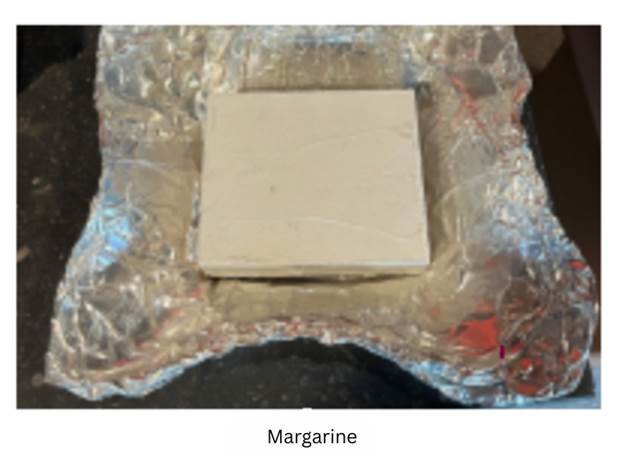
Since margarine achieved significant success in the United States during a certain period in history, butter producers, in order to preserve public demand for animal butter and reduce consumers’ inclination toward margarine, succeeded in persuading some state legislatures in America to pass laws prohibiting the coloring of margarine yellow. The purpose of this action was to prevent margarine from being mistaken for butter. In some states, these restrictions were stricter and only colorless or grayish-white margarine was permitted for consumption. Due to the ban on selling yellow margarine in some states, manufacturers were forced to market margarine in a colorless form along with small yellow coloring packets, so that consumers could mix the color with the product if they wished.
Global Consumption of Animal Butter and Margarine
According to the latest findings, the global market value of animal butter in 2023 was 40.04 billion US dollars and it is estimated that approximately 4.2 million tons of animal butter were consumed worldwide in that year. In addition, the latest statistics indicate that the global margarine market value reached 4.03 billion US dollars in 2024. It is estimated that about 3.2 million tons of margarine were consumed in 2024.
Introduction of Animal Butter and Margarine and Examination of Their Differences
- Animal Butter
Animal butter is a dairy product composed of approximately 82% fat, 16% water and 2% minerals. The fat present in animal butter is essentially the fat extracted from milk or its derived products such as cream. Animal butter contains compounds including fat-soluble vitamins (such as vitamin A, etc.) and essential fatty acids (such as linoleic acid, etc.) that the human body cannot synthesize and must obtain through food. Usually, no additives are used in the production of animal butter; however, in some cases, the additive beta-carotene, which is a natural colorant, may be used to improve its color.
Generally, animal butter available on the market is pasteurized. Pasteurized butter is obtained from cream that is first separated from milk and then subjected to pasteurization heat treatment. The purpose of pasteurization is to eliminate pathogenic microorganisms (such as Listeria, Salmonella and Escherichia coli bacteria) and to inactivate enzymes that may cause spoilage or flavor changes over time. This process not only makes butter safer from a hygienic standpoint but also increases its shelf life by reducing microbial load and prevents undesirable changes in flavor, color and texture during storage.
- Margarine
Margarine is based on vegetable oils such as soybean oil, corn oil, sunflower oil and others. In addition, permitted food additives are used in its production. Some of the common additives used in margarine production include:
- Salt: In margarine, salt improves flavor and maintains texture and also increases shelf life.
- Flavorings (natural or nature-identical): Margarine must have its own characteristic taste similar to animal butter; therefore, various flavorings are added to create this taste.
- Emulsifiers: Since margarine is essentially a water-in-oil mixture and these two do not naturally mix, emulsifiers such as mono- and diglycerides are used in margarine production to combine them and ultimately create a uniform and stable product.
- Antioxidants: Antioxidants such as tocopherol, propyl gallate and others are used to prevent spoilage and increase shelf life.
- Permitted food colorants: Vegetable butter should have a natural and uniform color, ranging from creamy white to pale yellow. To improve color, colorants such as curcumin, riboflavin, caramel and others may be used.
- Texture agents and stabilizers: Margarine should have a uniform and soft texture, so that a grainy sensation is not felt in the mouth and air bubbles are not visible on its surface. Therefore, stabilizers and texture agents such as propylene glycol alginate are used.
- Vitamins: The addition of vitamins such as A, D and E to margarine is permitted.
- Preservatives: Preservatives such as sorbic acid and its sodium and potassium salts prevent the growth of microorganisms and thus help extend shelf life.
Health Risks Associated with Animal Butter and Margarine
Both animal butter and margarine can pose health risks, especially if consumed continuously and in excessive amounts. The most important of these are mentioned below.
- Health Risks Associated with Animal Butter
The most important factor in animal butter that may be harmful to human health is its saturated fats (fats that are solid at room temperature). Some nutrition specialists believe that excessive consumption of saturated fats can lead to their deposition in blood vessels and increase the risk of heart disease. Organizations such as the American Heart Association also recommend reducing saturated fat intake as much as possible, especially in individuals who are genetically predisposed to high cholesterol and elevated blood lipids.
On the other hand, some recent studies have challenged previous views about the dangers of saturated fat and suggest that although saturated fats are usually associated with increased levels of LDL (bad cholesterol), they may also increase HDL (good cholesterol). Therefore, it is better to evaluate all blood lipid levels together.
- Health Risks Associated with Margarine
Although for many years margarine was considered a healthier substitute for animal butter due to its lower saturated fat content, recent research has shown that this food is not free of concerns. Some of these factors include:
- Additives: Margarine is an ultra-processed food and contains many additives, including emulsifiers, preservatives and stabilizers, added in permitted amounts to improve flavor, texture and shelf life. However, long-term consumption of some of them may pose health risks. For example, prolonged exposure to emulsifiers may be associated with an increased risk of type 2 diabetes, as these compounds can disrupt gut microbiota balance and lead to chronic inflammation, insulin resistance and metabolic disorders. In addition, long-term consumption of preservatives such as potassium sorbate may be associated with mutagenicity, genetic abnormalities and others.
- Trans Fats: Margarines are based on vegetable oils. Therefore, to increase stability against high heat and improve shelf life, liquid vegetable oils are converted into solid fats through hydrogenation, inevitably producing industrial trans fats during this process. Although many modern margarines contain less industrial trans fat compared to older versions, continuous and long-term consumption of trans fats, even in small amounts, can increase the risk of heart disease and other conditions.
- High Omega-6 Fatty Acid Content: Many vegetable oils used in margarine contain high amounts of omega-6 fatty acids, which increases the omega-6 to omega-3 fatty acid ratio. Although both omega-3 and omega-6 fatty acids are essential for health and play multiple roles, maintaining a balance between these two is very important. A high omega-6 to omega-3 ratio in diets has been reported as a risk factor for cardiovascular diseases, high blood pressure, atherosclerosis, stroke, type 2 diabetes, cancer and other chronic diseases.
Final Word
Excessive consumption of animal butter due to its high saturated fat content and vegetable butter (margarine) due to the presence of additives, trans fats, high omega-6 fatty acid content and others can pose health risks. Considering that animal butter is a natural product containing beneficial components for human health such as essential fatty acids and fat-soluble vitamins, it can be a more suitable and healthier choice compared to margarine. However, due to its high saturated fatty acid content, its consumption should be managed.